
A major contract is won by a manufacturer. While the requirements for monthly production have grown, the plant doesn’t suddenly have more floors or more experienced workers. While adding another shift might temporarily aid, it might also create new jobs as well as training, supervision, and the need for quality control.
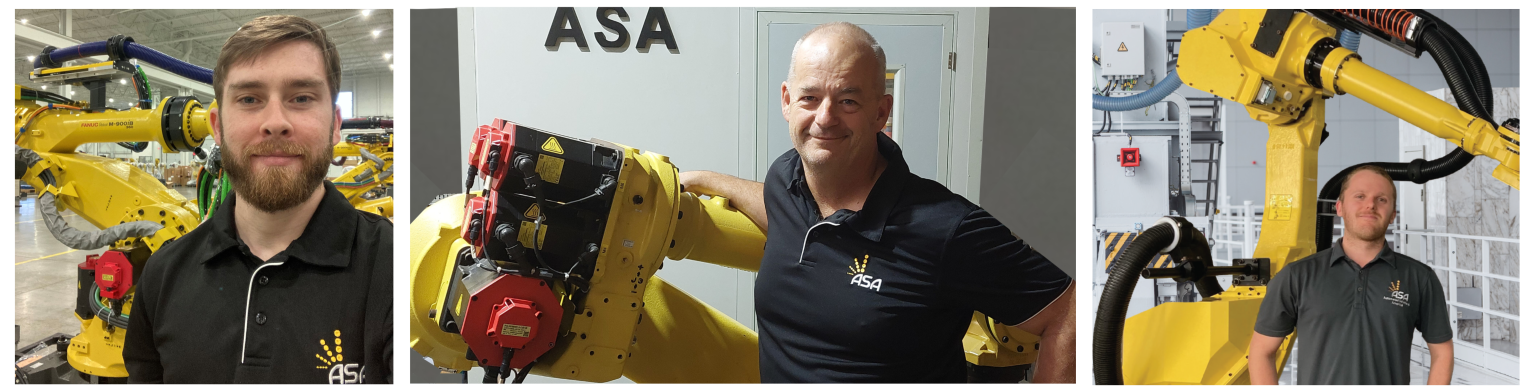
Image credit: automatedsolutions.com.au
Situations like this reveal an important purpose of robotic automation. Robotics isn’t only about replacing humans with machines. It’s a tool that can change the way manufacturers utilize their production capacity.
You can check out the time difference between products
Inefficient manufacturing may not be apparent. Suppose an operator spends 15 minutes putting a piece of equipment in place, another 10 seconds applying material, and then a few seconds moving it to the next operation. For a single component, the difference in time is not significant. If repeated a thousand times these seconds can increase production by a significant amount.
It is the same with wasted material. A tiny amount of leftover coating or dispensing material that is multiplied over a large-scale production run could be a substantial expense.
The businesses that are looking into robotic automation Australia will gain from studying these small, repetitive losses before they decide which equipment to buy. ASA’s analysis of requirements is designed to reveal problems with quality and bottlenecks as along with additional constraints and waste in a plan.
Robots need to be able fit into the process.
Robots are just one of the many engineering choices. Tools, guardings, controls as well as conveyors, sensors and fixtures might also be necessary. Engineers must consider the robot’s reach and payload, as well as how it interacts with its environment and move around.
ASA offers the ability to develop concepts, system design and offline programming as part of its method of robotic automation. Engineers are able to explore configurations for the system and estimate cycles before the system is finally installed on the factory floor. It is particularly helpful when there’s a finite space available or when the new robotics has to integrate with the production line.
Painting and dispensing show why Repeatability Matters
The ability to control movement is particularly important in some manufacturing processes. Imagine coating hundreds or thousands of parts. The goal isn’t just finishing each part quickly. The movement, distance, speed, and the application must be managed starting from the beginning of the production line until the time of its completion.
ASA has experts working on painting and dispensing solutions across a variety of industries, including automotive and aerospace. In these environments industrial robotic automation allows for predictable, controlled movements. It also decreases the risk of exposure for employees to physically challenging or potentially dangerous processes.
A better management of waste material can also aid in productivity improvement by decreasing the amount of unneeded material consumed.
Even after installation the system will still require people
Automation doesn’t eliminate the need for skilled manufacturing. The capabilities required to manage, maintain, and control the process evolve.
Employees should be aware of how to operate equipment in a safe manner, recognize abnormal behavior, troubleshoot faults, and conduct the necessary maintenance. The needs for production may change in time, meaning that procedures and protocols will need to be adapted.
ASA provides on-site training in safe operation, programming and troubleshooting. It also offers maintenance for electrical and mechanical components. It also offers servicing as well as ongoing support to evaluate the condition of equipment and to address wear and tear over the course of its operating lifespan.
Capacity refers to more than Working Faster
For Australian producers, expanding capacity doesn’t necessarily mean purchasing more space or adding labor to repetitive processes. Sometimes the better question is whether the current manufacturing process can be designed differently.
ASA has created and integrated automation systems in Australia since 2002. We also assist with projects in other countries. Its method of analysis connects needs and engineering with simulation FANUC robot integration training, servicing, and maintenance.
Automation is not the aim. A system that’s worthy of the gold it’s worth should provide measurable benefits to the manufacturer, like greater reliability, higher quality, safer processes and less waste.